Amber: The Golden Resin of Ancient Wisdom
Overview & Quick Facts
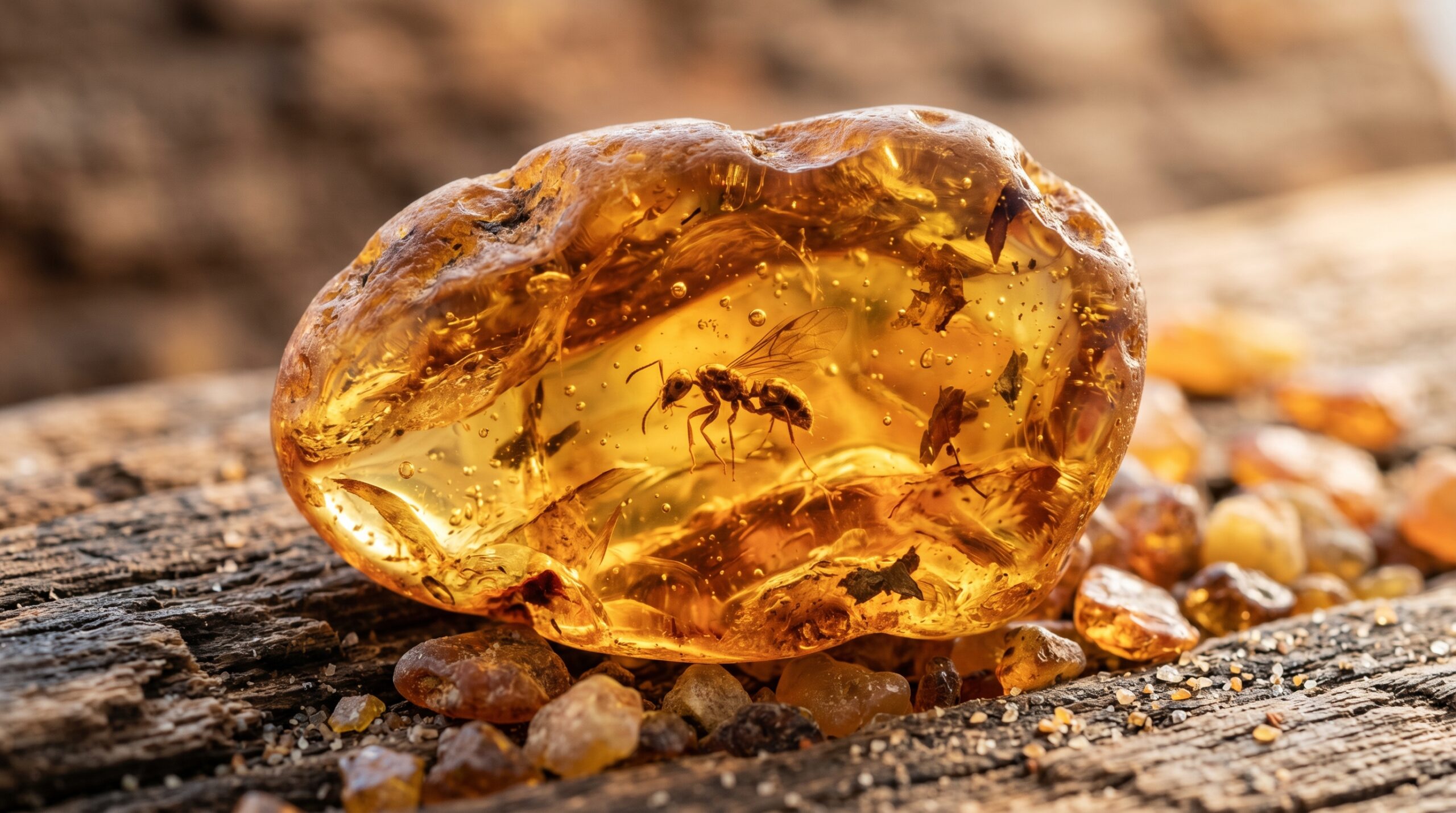
Amber is not a crystal or mineral, but rather fossilized tree resin that has hardened over millions of years. Known for its warm, golden-yellow to orange-brown hues, and sometimes reddish, greenish, or bluish tints, it often contains fascinating inclusions like ancient insects or plant matter. Amber is revered as a stone of ancient wisdom, warmth, and purification. It is deeply connected to Earth’s energies, promoting healing, emotional soothing, and a strong sense of grounding and protection. Its light and vibrant energy is believed to draw out negative energies and promote good luck.
- Name: Amber
- Color: Yellow, orange, brown, gold, red, sometimes green or blue (very rare); often translucent to opaque.
- Mineral Class: Organic (Fossilized Tree Resin)
- Chakras: Sacral (Svadhisthana), Solar Plexus (Manipura), sometimes Throat (Vishuddha)
- Zodiac: Leo, Aquarius, Gemini (traditional for some sources), Virgo (modern)
- Element: Earth, Fire
- Planetary Association: Sun
- Hardness (Mohs Scale): 2 – 2.5 (Very soft, easily scratched)
- Crystal System: Amorphous
- Numerical Vibration: 3
- Composition: Primarily carbon, hydrogen, oxygen (resin polymers, e.g., succinic acid in Baltic Amber).
- Transparency: Transparent to opaque
- Luster: Resinous to waxy
- Key Properties: Healing, soothing, purification, ancient wisdom, warmth, protection, vitality, manifestation, emotional release.
Scientific Formation & Composition
Amber is the fossilized resin of ancient trees, primarily conifers (such as Pinus succinifera in the case of Baltic Amber), that grew tens of millions of years ago. When trees are wounded, they exude a sticky resin to seal the injury and protect against insects and fungi. Over vast periods, this resin is buried under sediment, leading to a process called fossilization or polymerization.
This process involves:
- Resinization: Fresh resin hardens into copal.
- Polymerization: Under sustained pressure and heat from overlying sediments, the volatile components of the resin evaporate, and the organic molecules polymerize, becoming more stable and forming longer, cross-linked chains.
- Maturation: Over millions of years (typically at least 10 million years, but often 30-90 million years for most commercial amber), the copal transforms into true amber.
The composition of amber varies depending on its origin, but it is primarily composed of carbon, hydrogen, and oxygen. Baltic Amber (succinite) is particularly famous for containing 3-8% succinic acid, which is believed to contribute to its therapeutic properties. Inclusions of ancient insects, plant matter, or air bubbles are common and highly valued, offering a glimpse into prehistoric ecosystems.
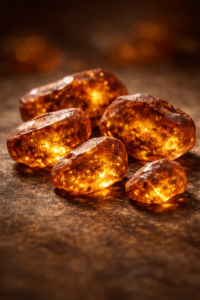
“Amber’s timeless beauty: Fossilized tree resin, hardened over millions of years, often preserving a glimpse of ancient life within its golden embrace.”
Physical Characteristics
Amber is distinctive for its warm range of colors, from pale yellow to deep orange and reddish-brown, often appearing golden. It can be transparent, translucent, or opaque (known as “butterscotch” amber when opaque and yellowish). Its luster is typically resinous to waxy. Amber is very light for its size and can sometimes float in saltwater, which is a key identifying characteristic. It is also quite soft, ranking 2 to 2.5 on the Mohs scale, making it easily scratched. It has no cleavage and a conchoidal fracture. When rubbed, it can develop an electrostatic charge, which is why the ancient Greeks called it “electron.”
Origins & Geography
Amber is found in various locations globally, often associated with ancient forests and sedimentary deposits. The age of amber varies widely, from Eocene (56-34 million years ago) to Miocene (23-5.3 million years ago) or even Cretaceous periods.
Major sources of Amber include:
- Baltic Sea Region (Russia, Poland, Lithuania, Germany, Denmark): This is the most famous and prolific source of “Baltic Amber” (succinite), which is typically 35-50 million years old and known for its succinic acid content. Kaliningrad (Russia) holds the world’s largest deposits.
- Dominican Republic: Known for its younger amber (15-25 million years old), which often has a more varied color palette (including blue and green fluorescent varieties) and is particularly prized for its numerous insect and plant inclusions.
- Mexico (Chiapas): Produces “Chiapas Amber,” typically 20-30 million years old, often with fluorescent properties.
- Myanmar (Burma – Burmite): This is one of the oldest ambers, dating back to the Cretaceous period (99 million years old). It’s significant for very ancient inclusions.
- Sicily (Italy): Historically a source of red (cherry) amber.
- Canada (Alberta, Manitoba): Minor occurrences of amber.
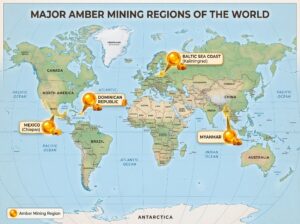
“The ancient global trail of Amber: From the Baltic shores to tropical Caribbean forests, a fossilized treasure found across continents.”
Cultural History & Legends
Amber has a profound and extensive cultural history, valued across civilizations for its beauty, supposed magical properties, and medicinal uses.
- Prehistoric Times: One of the first substances used for adornment, found in Stone Age graves.
- Ancient Greece: Known as “elektron” (from which “electricity” is derived) due to its electrostatic properties. Plato and Hippocrates wrote about its medicinal uses.
- Roman Empire: Highly prized and considered a luxury item, often traded along the “Amber Road” from the Baltic Sea. Used for jewelry, amulets, and often ground into powder for medicinal purposes.
- Nordic & Baltic Cultures: Deeply integrated into folklore. Believed to bring good luck, protect against evil spirits, and offer healing. Often given to babies for protection and to soothe teething pain.
- Asian Cultures: Revered as the “soul of the tiger” in some Asian cultures, symbolizing courage and protection. Used in traditional medicine.
- Religious Significance: Used for rosaries and prayer beads in some traditions, symbolizing purity and divine connection.
- Folklore: Legends speak of amber as solidified sunlight, tears of the gods, or the petrified resin from the world tree Yggdrasil. Its ability to preserve life forms within it gave it mystical significance related to immortality and memory.
Spiritual, Emotional, Mental & Physical Healing
Amber is a potent energetic cleanser and healer, renowned for its warm, soothing vibrations.
- Spiritual: Amber carries ancient wisdom and grounding energy, connecting one to the Earth’s timeless cycles and ancestral knowledge. It is a powerful purifier of the aura and environment, drawing out negative energies and promoting a positive, sunlit disposition. It helps in spiritual purification, emotional release, and grounding higher spiritual awareness into everyday life. It can enhance psychic abilities and memory, especially for past lives.
- Emotional: A profoundly soothing and comforting stone, Amber helps to alleviate stress, anxiety, and depression. It promotes emotional healing, encouraging emotional self-expression and the release of bottled-up feelings. It instills a sense of warmth, security, and well-being, helping to overcome feelings of fear and helplessness. It fosters patience, flexibility, and a positive outlook on life.
- Mental: Enhances mental clarity, sharpens intellect, and improves memory. It helps in decision-making by clarifying intentions and fostering a sense of inner truth. Amber is believed to stimulate the brain, aiding in overcoming intellectual blocks and promoting creative problem-solving.
- Physical: Amber has been used for centuries in traditional medicine. It is primarily known for its pain-relieving and anti-inflammatory properties, particularly when worn against the skin (e.g., amber teething necklaces for babies, or bracelets/necklaces for arthritis). It is believed to boost the immune system, purify the body, and absorb pain and negative energy from the wearer. It can aid in issues related to the throat, stomach, spleen, kidneys, and bladder. Some also use it for conditions like asthma, allergies, and general fatigue.
Uses: Meditation, Ritual, Relationships, Therapy
Amber’s warm and ancient energy makes it versatile for various practices.
- Meditation: Meditating with Amber can facilitate a deep connection to Earth’s ancient wisdom, promoting profound emotional release and purification. Its soothing energy helps calm the mind and body for deeper states of contemplation.
- Ritual: Used in purification rituals, protective spells, and ceremonies for healing, abundance, and drawing in positive energy. It’s often placed on altars to connect with ancestral spirits or the energy of the Sun.
- Relationships: Amber fosters warmth, trust, and emotional understanding in relationships. It helps in releasing emotional baggage from past relationships and encourages open, honest communication from a place of compassion. It can re-ignite passion and joy.
- Therapy: In crystal healing, Amber is frequently placed directly on areas of pain or discomfort to draw out negative energy and promote healing. It’s commonly used on the Sacral and Solar Plexus Chakras for emotional release, vitality, and digestive support. It’s also utilized for detoxification and boosting the immune system.
Chakras Activated
Amber primarily activates and warms the lower chakras, particularly the Sacral and Solar Plexus, fostering vitality and emotional well-being.
- Sacral Chakra (Svadhisthana): Located below the navel, associated with creativity, passion, sexuality, and emotional fluidity. Amber stimulates and balances this chakra, promoting joy, vitality, and the healthy expression of emotions.
- Solar Plexus Chakra (Manipura): Situated above the navel, linked to personal power, self-esteem, and digestion. Amber cleanses and energizes this chakra, boosting confidence, manifestation abilities, and dispelling anxieties.
- Throat Chakra (Vishuddha): While primarily lower chakra focused, some brighter, clearer pieces can also gently stimulate the Throat Chakra, aiding in clear communication and truth-telling, particularly with its historical use for teething discomfort.
Wearing, Home, and Workplace Uses
Amber is extremely popular for jewelry and decorative items due to its unique appearance and light weight.
- Wearing: Wearing Amber jewelry (necklaces, bracelets, earrings, rings) is highly recommended, especially directly against the skin, to allow its healing properties to be absorbed. Necklaces are popular for soothing thyroid issues or emotional distress, while bracelets are used for arthritis or carpal tunnel. It brings warmth, vitality, and protection.
- Home:
- Common Areas: Placing Amber pieces in living rooms or communal spaces brings a warm, cheerful, and purifying energy, promoting harmony and emotional well-being.
- Bedrooms: A small piece can promote peaceful sleep and dispel nightmares by drawing out negative energies.
- Children’s Rooms: Used for centuries as a calming and protective stone for children, particularly during teething (ensure safety if using necklaces for infants).
- Workplace:
- Desk: Placing Amber on your desk can help alleviate stress, purify the environment, and boost creativity and motivation. It can also help draw in good luck and success in business ventures.
- Areas of High Stress: Its soothing energy can help mitigate tension and promote a more harmonious atmosphere.
Crystal Combinations
Amber’s purifying and warming energy makes it a great complement to many other crystals.
- With Clear Quartz: Amplifies Amber’s healing, cleansing, and protective properties, making its energy more potent and expansive.
- With Citrine: Enhances manifestation abilities, joy, and abundance, creating a powerful duo for attracting prosperity and positive energy.
- With Carnelian: Boosts vitality, courage, creativity, and sexual energy, intensifying Amber’s warming and vitalizing effects.
- With Jet or Black Tourmaline: Creates a strong protective shield, as Jet/Tourmaline ground and absorb negativity, while Amber purifies and transmutes it.
- With Malachite: For deep emotional release and physical healing, combining Amber’s gentle purification with Malachite’s transformative power.
Shapes & Forms
Amber is found in various natural and polished forms.
- Raw/Rough Pieces: Natural, unpolished chunks, often with fossilized inclusions.
- Tumbled Stones: Smooth, polished pieces, popular for carrying, chakra placement, or decoration.
- Beads: Widely used for necklaces, bracelets, and malas, especially popular for teething necklaces.
- Cabochons: Smooth, rounded, polished pieces, commonly set into jewelry.
- Carvings: Sculpted into various objects like animals, figures, or decorative items.
- Jewelry: Extremely popular in all forms of jewelry, including rings, pendants, earrings, bracelets, due to its lightweight nature and warm aesthetics.
Energy Color & Zodiac Significance
- Energy Color: Amber’s primary golden-yellow to orange-brown color spectrum is deeply symbolic of the sun’s energy, warmth, and vitality. Yellow represents joy, intellect, and personal power. Orange signifies creativity, passion, and emotional balance. Brown brings grounding and connection to the Earth. The overall energy is one of comforting warmth, purification, and ancient, joyful wisdom.
- Zodiac Significance: Amber is not a traditional birthstone for a specific month, but its energy resonates with several zodiac signs.
- Leo (July 23 – August 22): Enhances Leo’s natural charisma, vitality, and leadership qualities, reflecting their connection to the sun.
- Aquarius (January 20 – February 18): Helps Aquarius to ground their innovative ideas and connect with ancient wisdom while promoting emotional healing.
- Gemini (May 21 – June 20): Can bring focus and stability to the dualistic nature of Gemini, while also promoting clear communication.
- Virgo (August 23 – September 22): Supports Virgo’s analytical nature with warmth and helps to soothe anxiety, promoting grounding.
Cleansing, Charging & Care Instructions
Amber is very soft and requires gentle care.
- Cleansing:
- Soft Cloth: Gently wipe with a soft, damp cloth.
- Smudging: Pass through sage or palo santo smoke. This is a very safe method.
- Moonlight: Place under the light of a full moon overnight.
- Earth Burial: Bury in dry earth overnight (in a cloth bag) for deep cleansing.
- Avoid Water Soaking: Do NOT soak in water for extended periods, especially saltwater, as it can dull the polish or dry out the amber.
- Avoid Salt: Do not use salt baths or dry salt to cleanse, as salt can scratch or damage its surface.
- Charging:
- Sunlight: Place in gentle sunlight for a few hours (avoid intense, prolonged direct sun, which can dry it out).
- Moonlight: Excellent for gentle charging.
- Earth: Place on natural earth or near plants.
- Care:
- Delicate: With a Mohs hardness of 2-2.5, Amber is very soft and easily scratched. Avoid wearing it during strenuous activities.
- Avoid Harsh Chemicals: Keep away from perfumes, hairsprays, cosmetics, harsh detergents, solvents, and alcohol, as these can damage its surface.
- Heat: Protect from extreme heat and sudden temperature changes, which can cause it to crack or cloud. Avoid leaving it in direct, intense sunlight for long periods (e.g., in a hot car).
- Cleaning: Clean with a very soft, damp cloth and mild, non-abrasive soap if necessary. Wipe dry immediately. Do NOT use ultrasonic or steam cleaners.
- Storage: Store Amber jewelry and specimens separately in a soft cloth pouch or a lined box to prevent scratching from harder objects.
Authenticity Tips
Amber is frequently imitated or misrepresented. Common imitations include copal (younger resin, softer), glass, plastic, and reconstituted amber (small pieces pressed together).
- Warm to the Touch: Genuine amber feels warm to the touch, unlike glass or plastic, which feel cold.
- Lightweight: Amber is very light. If it feels heavy for its size, it might be glass.
- Saltwater Test: Genuine amber often floats in strong saltwater (about 2-3 tablespoons of salt per cup of water), while plastic and glass will sink. This is a good test for beads but not for metal-set jewelry. Rinse thoroughly afterwards.
- Acetone Test: A drop of acetone (nail polish remover) on an inconspicuous spot: Copal will become sticky, plastic will show no effect, but genuine amber will usually show no effect or become very slightly sticky (test with caution).
- Hot Needle Test (Destructive): A heated needle applied to an inconspicuous spot: Genuine amber will give off a distinct pine-like resinous smell and the needle will sink in. Plastic will smell like burnt plastic, and glass will not mark. (Use with extreme caution and only as a last resort).
- UV Light: Many ambers, especially Baltic Amber, fluoresce blue or green under UV light.
- Inclusions: Real insects in amber are often perfectly preserved but sometimes appear somewhat damaged from the trapping process. Perfectly centered, too-good-to-be-true inclusions can be fake.
FAQ Section
- Q: Is Amber a crystal or a stone?
- A: No, Amber is not a crystal or mineral stone. It is fossilized tree resin, an organic gem material that formed over millions of years.
- Q: What is Amber good for?
- A: Amber is highly valued for its healing, soothing, and purifying properties. It’s believed to draw out negative energy, reduce pain and inflammation (especially for teething and arthritis), boost immunity, and bring warmth and vitality.
- Q: Can Amber get wet?
- A: Brief exposure to water for gentle cleaning is okay, but prolonged soaking, especially in saltwater, should be avoided as it can dull the polish or dry out the amber.
- Q: Why do people wear Amber for teething?
- A: Baltic Amber contains succinic acid, which is believed to be released when warmed by the skin. This acid is thought to have natural anti-inflammatory and pain-relieving properties, soothing teething discomfort. (Always ensure safety and supervise infants when wearing necklaces).
- Q: How can I tell if my Amber is real?
- A: The most common tests include its warmth to the touch, lightness in weight, ability to float in strong saltwater, and a piney smell when a hot needle is carefully applied to an inconspicuous spot (use caution). Professional gemological testing is definitive.
Final Summary / Closing Thoughts
Amber, the golden tear of ancient forests, offers a tangible connection to Earth’s deep past and a comforting presence in the present. More than just a beautiful adornment, it is a living fossil imbued with warmth, purification, and the gentle power to heal. Its age-old wisdom continues to bring solace, vitality, and a sunlit sense of protection to all who embrace its unique energy, reminding us of the enduring beauty and resilience found within nature’s most precious gifts.