Malachite: The Stone of Transformation, Protection, and Courage
Overview & Quick Facts
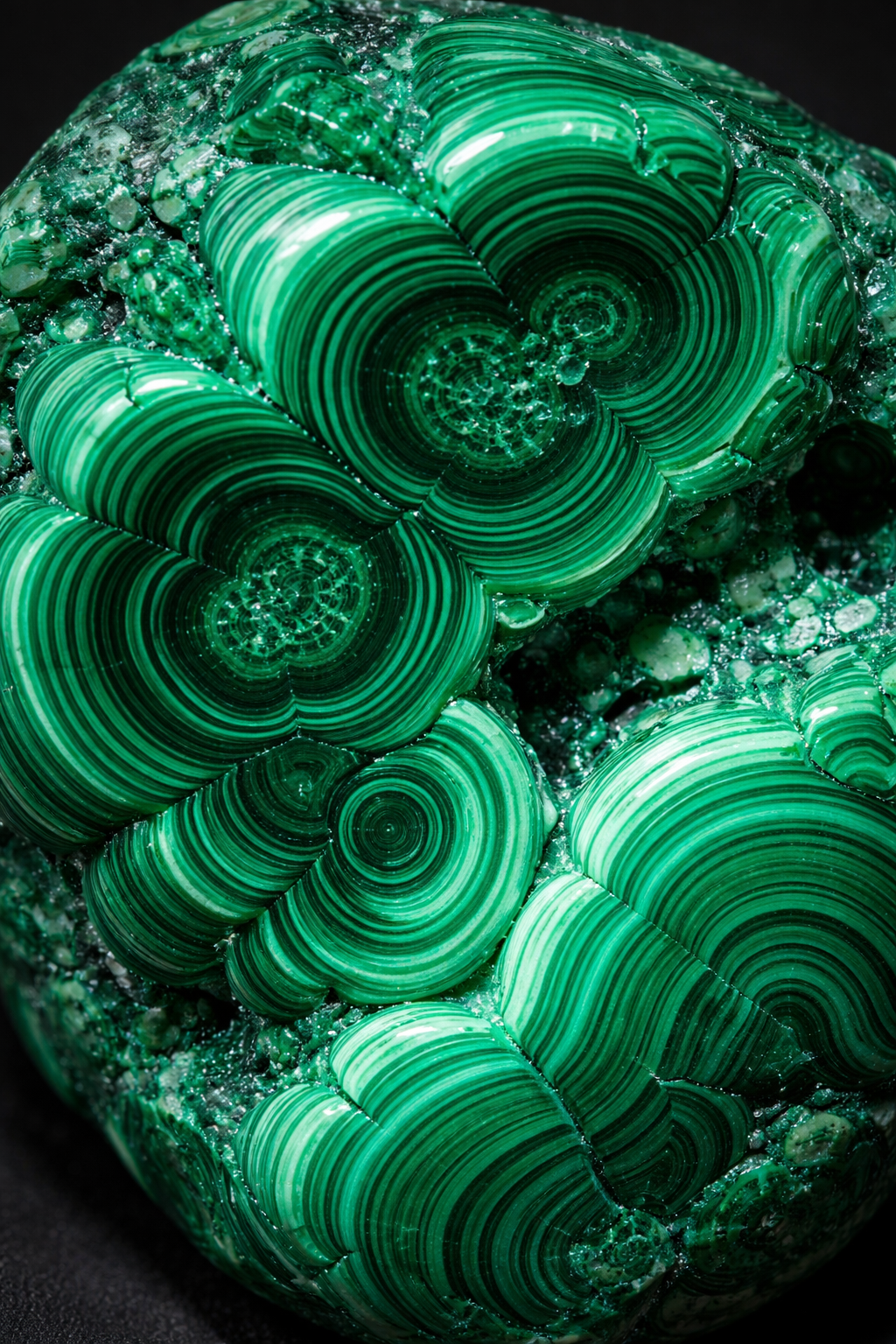
Malachite is a stunning, vibrant green copper carbonate mineral known for its distinctive banded, swirling, or concentric patterns, ranging from light to very dark green. Its rich color is due to its copper content. It is often found alongside other copper minerals like Azurite, Chrysocolla, and Copper itself. Malachite has been prized since ancient times, used extensively in jewelry, ornamental objects, and as a pigment. Metaphysically, Malachite is revered as a powerful “Stone of Transformation,” “Protection,” and “Courage.” It is highly valued for its ability to absorb negative energies and pollutants from the atmosphere and the body, courageously facilitate deep emotional healing, and encourage risk-taking and positive change. It is considered a stone that clears and activates all chakras, empowering one to step out of their comfort zone, embrace personal growth, and navigate life’s shifts with strength and renewed purpose.
- Name: Malachite (from Greek molochitis lithos – mallow-green stone, referring to its color)
- Color: Various shades of green, from light green to very dark, nearly black-green, often with banding, swirls, or concentric patterns.
- Mineral Class: Carbonate (Copper Carbonate)
- Chakras: Heart (Anahata), Throat (Vishuddha), Third Eye (Ajna)
- Zodiac: Scorpio, Capricorn
- Element: Fire, Earth
- Planetary Association: Venus
- Hardness (Mohs Scale): 3.5 – 4
- Crystal System: Monoclinic
- Numerical Vibration: 9
- Composition: Cu2(CO3)(OH)2 (Copper Carbonate Hydroxide)
- Transparency: Opaque
- Luster: Silky, Vitreous (glassy) to Dull or Earthy
- Key Properties: Transformation, protection, courage, emotional healing, absorbs negativity, risk-taking, change, intuition, leadership, manifestation.
Scientific Formation & Composition
Malachite is a copper carbonate hydroxide mineral with the chemical formula Cu2(CO3)(OH)2. Its vivid green color is directly attributed to its high copper content.
Malachite forms as a secondary mineral in the oxidation zones of copper deposits. This occurs through the following process:
- Primary Copper Deposits: Malachite originates from the weathering and alteration of primary copper minerals (like chalcopyrite) near the Earth’s surface.
- Oxidation: When copper-bearing sulfides are exposed to oxygen, carbon dioxide, and water (often acidic groundwater), they react chemically.
- Precipitation: These reactions form copper-rich solutions that then precipitate as copper carbonate minerals, including malachite, often filling cavities, fissures, and porous areas in limestone.
- Banding: The characteristic banding patterns are a result of variations in the composition of the solutions, temperature, or other environmental conditions during its deposition, leading to successive layers of different shades of green. It often forms in botryoidal (grape-like), stalactitic, or massive habits.
“Malachite’s Verdant Depths: This copper carbonate hydroxide mineral (Cu2(CO3)(OH)2) forms through the oxidation of primary copper deposits. Its iconic banded patterns are a testament to successive layering during its precipitation, with its vibrant green color stemming directly from its high copper content.”
Physical Characteristics
Malachite’s physical characteristics are dominated by its intense green color and unique patterning.
- Color: Always green, ranging from very light, sometimes yellowish-green, to brilliant emerald green, and deep, dark forest green. It almost always displays characteristic banding, swirls, or concentric eye-like patterns of varying shades of green.
- Luster: Can range from silky (in fibrous forms) to vitreous (glassy) in crystalline areas, and often dull or earthy in massive forms. Polished pieces usually have a high vitreous luster.
- Transparency: Opaque. Light does not pass through it.
- Hardness: Relatively soft, with a Mohs hardness of 3.5 – 4. This makes it susceptible to scratching from harder materials and requires gentle handling.
- Density: Moderately dense, feels substantial for its size.
- Crystal System: Monoclinic. Although individual crystals are rare, it most commonly forms in massive, botryoidal, stalactitic, or fibrous aggregates.
- Streak Color: Light green (a key identifying characteristic).
- Effect: Sometimes exhibits a chatoyancy (cat’s eye effect) when polished from fibrous material.
Origins & Geography
Malachite deposits are found in regions with significant copper reserves worldwide.
Major sources of Malachite include:
- Democratic Republic of Congo (DRC): The largest producer of high-quality Malachite, known for its deep green colors and intricate patterns.
- Russia (Ural Mountains): Historically famous for enormous deposits, particularly around the Nizhny Tagil area, where large ornamental pieces were carved (e.g., in the Hermitage Museum).
- Australia (Queensland, Northern Territory): Significant sources.
- USA (Arizona), Chile, Namibia, Mexico, Zambia, France: Other notable localities.
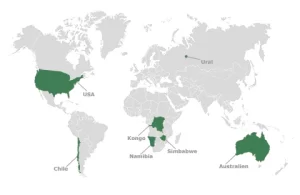
“Malachite’s Global Reach: Predominantly mined in the copper-rich regions of the Democratic Republic of Congo, historically in Russia’s Ural Mountains, and also found in Australia, Malachite’s presence is tied to oxidized zones of major copper deposits across the globe.”
Cultural History & Legends
Malachite boasts an exceptionally rich and ancient cultural history, valued across civilizations for its vibrant color and perceived protective properties.
- Ancient Egypt: Highly revered and used extensively for jewelry, amulets (believed to protect against evil), cosmetics (ground into eye shadow/pigment), and ornamental objects. It was associated with the goddess Hathor and symbolized joy, beauty, and rebirth. Children sometimes wore it to prevent falls.
- Ancient Greece & Rome: Used for jewelry, ornaments, and architectural elements. The Romans associated it with Venus, the goddess of love.
- Middle Ages: Believed to protect against the “evil eye” and witchcraft. It was also thought to provide comfort to those suffering from stomach ailments.
- Renaissance: Used as a pigment (Verditer) in frescoes and paintings, though its instability with certain other pigments led to its eventual replacement by synthetic blues and greens.
- Russian Imperial Era: Extensively used in large-scale architectural decoration, such as the Malachite Room in the Hermitage Museum, showcasing its opulence.
- Modern Symbolism: Continues to be a popular stone for protection, transformation, and drawing out negative energies in crystal healing.
Spiritual, Emotional, Mental & Physical Healing
Malachite is a potent stone for transformation, emotional healing, and energetic protection.
- Spiritual: Malachite is a powerful spiritual protector, absorbing negative energies and pollutants from the aura and environment. It helps to clear and activate all chakras, aligning one with spiritual guidance. It brings light and clarity to spiritual insights, enhancing intuition and psychic abilities. It encourages one to take spiritual risks, step into their true power, and manifest their divine purpose. It facilitates spiritual transformation and helps in understanding deep spiritual lessons, breaking unwanted patterns, and embracing evolution.
- Emotional: Malachite is an intense emotional healer. It courageously draws out and confronts deeply buried emotional pain, trauma, and repressed feelings. It helps to break unwanted ties and outdated patterns, fostering emotional independence and resilience. It is excellent for identifying and releasing negative experiences and old traumas, allowing for profound emotional purging and renewal. It encourages empathy and helps to reduce shyness, providing confidence in emotional expression. It aids in navigating periods of significant emotional change and transition.
- Mental: Malachite enhances mental clarity, concentration, and leadership qualities. It helps to absorb and process information more effectively, fostering objective and rational decision-making. It encourages clear communication and the ability to articulate one’s ideas and beliefs with conviction. It stimulates creativity and helps in overcoming inertia, encouraging dynamic action and positive change. It can assist in breaking negative mental habits and fostering a more optimistic and proactive mindset.
- Physical: Energetically, Malachite is a strong detoxifier and pain reliever. It is commonly used for absorbing environmental pollutants (EMF, radiation) and drawing out physical pain, especially from joints (e.g., arthritis) and muscles. It’s often associated with support for the heart, liver, and pancreas. It’s believed to aid in tissue regeneration, strengthen the immune system, and help with issues related to cramps (menstrual, muscle). Its powerful energy is used to facilitate healing from physical trauma or long-standing illness by addressing underlying energetic imbalances.
Uses: Meditation, Ritual, Relationships, Therapy
Malachite’s transformative and protective qualities make it highly sought after for various applications.
- Meditation: Meditating with Malachite can bring deep insights into one’s emotional patterns and spiritual blockages. Placing it on the Heart or Third Eye Chakra helps to open these centers, facilitating emotional release and intuitive clarity. Due to its intensity, some might find it overwhelming initially, so start with short sessions.
- Ritual: Used extensively in rituals for transformation, protection (especially against negative energy and psychic attack), manifestation, and breaking old patterns or addictions. It can be placed on an altar, used in crystal grids for powerful healing or protection, or held during ceremonies aimed at embracing significant life changes, fostering courage, or drawing out deep-seated issues.
- Relationships: Malachite encourages truth, emotional honesty, and strength in relationships. It helps individuals to break patterns of codependency, confront difficult truths, and establish healthy boundaries. It can be a challenging but ultimately transformative stone for relationships, encouraging both parties to grow and evolve. It helps to release emotional baggage from past relationships, preparing one for healthier connections.
- Therapy: In crystal healing, Malachite is a potent tool for clients undergoing deep emotional healing, dealing with trauma, seeking to break addictive behaviors, or navigating major life transitions. Practitioners place it on areas of pain, on the Heart or Solar Plexus for emotional release, or on the Third Eye for insight. Due to its absorption properties, it’s crucial to cleanse Malachite regularly.
Chakras Activated
Malachite works with all chakras, but has a strong resonance with the Heart, Throat, and Third Eye.
- Heart Chakra (Anahata): Located in the center of the chest, associated with love, compassion, emotional healing, and harmony. Malachite opens and activates the heart, facilitating deep emotional release and promoting love.
- Throat Chakra (Vishuddha): Located in the throat, associated with communication, truth, and self-expression. Malachite empowers one to speak their truth with courage and clarity.
- Third Eye Chakra (Ajna): Located between the eyebrows, associated with intuition, psychic abilities, inner vision, and insight. Malachite enhances spiritual insight and helps in understanding complex patterns.
- Solar Plexus Chakra (Manipura): Located above the navel, associated with personal power, will, and transformation. Malachite strengthens willpower and encourages positive action.
Wearing, Home, and Workplace Uses
Malachite’s beauty and powerful protective qualities make it a popular choice for jewelry and home decor.
- Wearing: Malachite is widely used in jewelry (cabochons in rings, pendants, bracelets, beads), but care is needed due to its softness. Wearing Malachite keeps its protective and transformative energies close, shielding against negativity, encouraging emotional honesty, and fostering personal growth throughout the day. It’s especially useful when facing significant changes or needing courage.
- Home:
- Entryway: Place near the front door to absorb negative energies and protect the home from unwanted influences.
- Living Room/Common Areas: To encourage honest communication, emotional release, and foster a transformative atmosphere within the household.
- Work/Study Area: To enhance concentration, creativity, and clarity in decision-making, particularly when dealing with complex issues or needing courage for new projects.
- Near Electronics: Some believe it can help absorb electromagnetic pollution (EMF), though other stones like Shungite or Black Tourmaline are often preferred for this.
- Workplace:
- Desk/Workstation: Ideal for enhancing focus, encouraging bold decision-making, and protecting against office politics or energy draining from colleagues.
- Client-Facing Roles: For those in positions requiring strong leadership or dealing with difficult situations, it provides courage and clarity.
- Creative Spaces: To stimulate imagination and breakthrough ideas.
Crystal Combinations
Malachite’s intense energy combines powerfully with crystals that provide grounding, amplify transformation, or enhance its protective qualities.
- With Black Tourmaline or Hematite: Creates a powerful shield against all forms of negativity, grounding Malachite’s intense transformative energy and ensuring safe emotional release.
- With Chrysocolla or Azurite: These are copper minerals often found with Malachite. Combining them amplifies their respective properties of communication, emotional expression, and healing.
- With Rose Quartz or Rhodonite: For a more gentle and compassionate approach to emotional healing, balancing Malachite’s intense purging energy with nurturing love.
- With Clear Quartz or Selenite: Amplifies Malachite’s transformative, protective, and healing properties, making its energy more potent and pervasive, while also adding cleansing elements.
- With Labradorite: For enhancing intuition and providing additional psychic protection during periods of intense emotional or spiritual transformation.
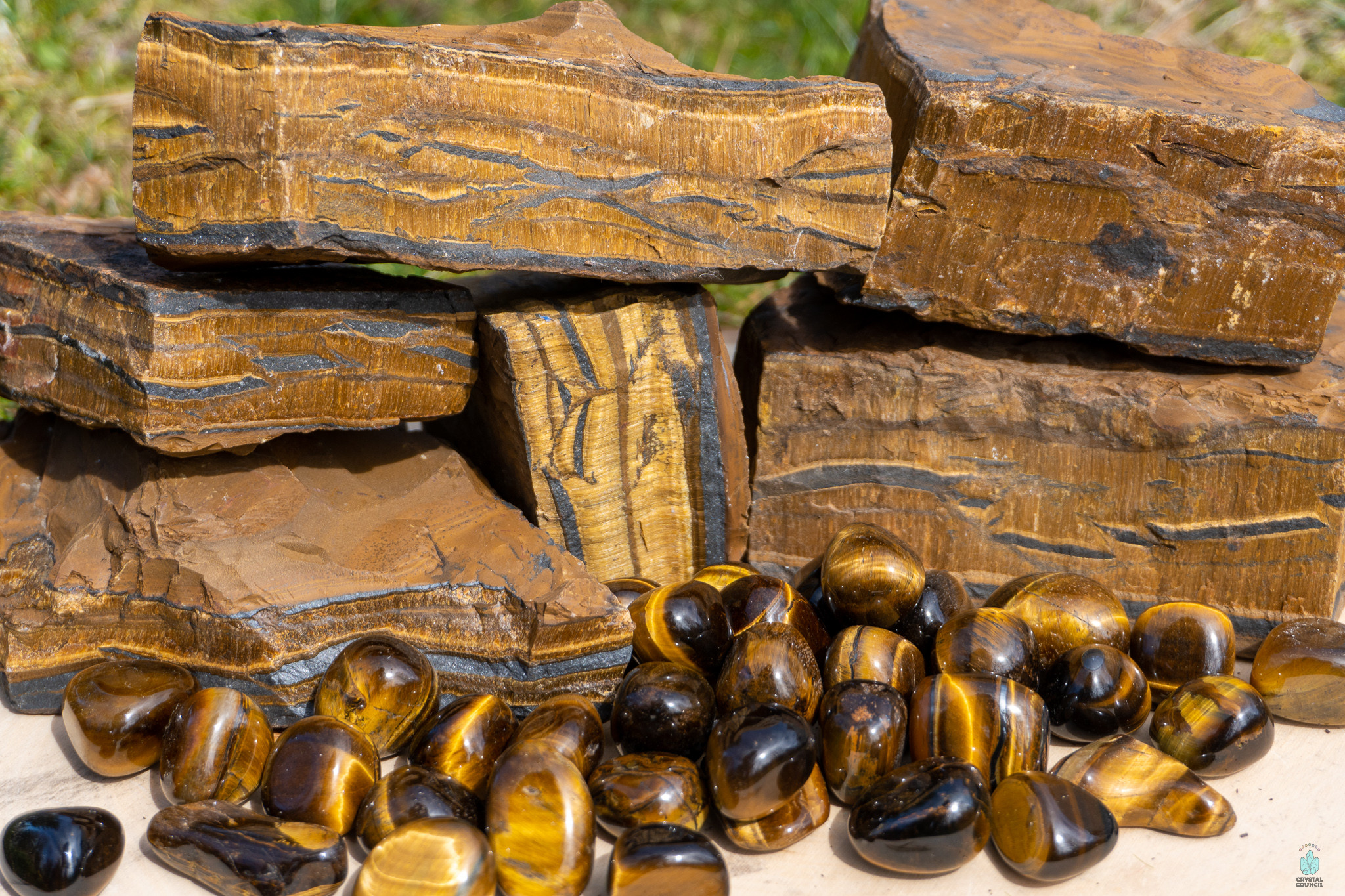
- With Tiger’s Eye: Strengthens courage, willpower, and personal power, especially for taking bold steps and manifesting change.
Shapes & Forms
Malachite’s unique patterns make it ideal for polished forms.
- Polished Cabochons: Very common and popular for jewelry, as this cut best displays its distinct banded patterns.
- Tumbled Stones: Widely available and affordable, popular for carrying, grids, or general use.
- Spheres/Eggs/Pyramids/Obelisks: Larger pieces are shaped into ornamental items, allowing for full appreciation of its patterns.
- Carvings: Due to its moderate hardness and beautiful patterns, Malachite has been extensively carved into intricate figures, boxes, bowls, and decorative objects throughout history.
- Rough/Natural Specimens: Often found in botryoidal (grape-like) or stalactitic formations, showcasing its natural growth habits.
- Beads: Popular for necklaces and bracelets.
Energy Color & Zodiac Significance
- Energy Color: Malachite’s energy color is predominantly green, symbolizing:
- Green: Growth, healing, abundance, nature, balance, heart connection, transformation, vitality, renewal.
- Dark Green: Deep healing, profound transformation, protective grounding, wisdom.
- Zodiac Significance: Malachite’s transformative, protective, and courageous qualities resonate particularly with signs that are ready for deep change, emotional processing, and embracing their power.
- Scorpio (October 23 – November 21): Perfectly aligns with Scorpio’s transformative nature, helping them to confront and release deep emotional issues, embrace rebirth, and use their power wisely.
- Capricorn (December 22 – January 19): Supports Capricorn’s ambition and drive, providing courage to take necessary risks and facilitating the transformation required for long-term success, while also aiding in emotional grounding.
Cleansing, Charging & Care Instructions
Malachite is a very powerful absorber of negative energy, making regular cleansing crucial. However, it requires extremely careful handling due to its softness and copper content.
- Cleansing:
- Smudging: Pass through sage or palo santo smoke. This is the safest and most highly recommended method for Malachite.
- Sound: Use a singing bowl or tuning fork. Highly effective and safe.
- Earth: Bury in dry earth (in a cloth bag to keep clean) for several hours or overnight for deep grounding and purification. Ensure the spot is dry.
- Indirect Selenite or Clear Quartz: Place on a Selenite charging plate or within a Clear Quartz cluster to cleanse its energy.
- Avoid Water: ABSOLUTELY NOT recommended for cleansing Malachite. Malachite is a copper carbonate, meaning it can dissolve in water over time, especially if the water is acidic. This can damage the stone and release toxic copper compounds into the water.
- Avoid Salt Water: ABSOLUTELY NOT recommended. Salt is abrasive and can damage the surface, and combined with water, it accelerates the degradation process.
- Avoid Harsh Chemicals/Acids: Will severely damage or dissolve the stone.
- Charging:
- Moonlight: Place under the light of a full moon overnight for a gentle and balanced charge. This is an excellent method.
- Earth: Bury in dry earth (in a cloth bag) for several hours for deep grounding and revitalization.
- Clear Quartz or Selenite: Place on a Clear Quartz cluster or Selenite charging plate to amplify its energy.
- Sunlight (Brief/Indirect): Brief, indirect sunlight is generally okay, but prolonged direct sunlight should be avoided as it might cause the color to dull over a very long time.
- Care:
- Softness & Toxicity: With a Mohs hardness of 3.5-4, Malachite is relatively soft and easily scratched. It is also a copper mineral, and in its raw, unpolished, or broken form, it can release toxic dust. Avoid inhaling dust from rough Malachite. Do not use Malachite in elixirs or gem waters unless a safe indirect method is used. Always wash hands after handling rough Malachite.
- Handle with Care: Always handle Malachite gently to avoid scratches, chips, or breakage.
- Ultrasonic & Steam Cleaners: ABSOLUTELY NOT recommended. The vibrations, heat, and water will cause immediate and severe damage and potentially release toxic substances.
- Chemical Sensitivity: Avoid contact with harsh chemicals, solvents, strong detergents, perfumes, and even highly acidic skin oils, which can damage its surface or cause it to react.
- Cleaning (Physical Dust): Use only a very soft, dry cloth to gently wipe the surface. If absolutely necessary, a very slightly damp (almost dry) cloth can be used for polished surfaces, but dry immediately and thoroughly.
- Storage: Store Malachite jewelry or specimens separately in a soft pouch or lined box, away from all other minerals and jewelry that could scratch its surface. Keep away from humidity and strong light sources.
Authenticity Tips
Identifying genuine Malachite is usually straightforward due to its distinctive color and patterns. Be aware of common imitations and treated stones.
- Color & Banding: Genuine Malachite has a characteristic range of green shades with distinctive natural banding, swirls, or concentric patterns. The patterns should look organic and varied, not uniform or printed. The colors within the bands will vary, usually from light to dark green.
- Opaque: Malachite is always opaque. If it’s transparent or translucent, it’s not real Malachite.
- Weight & Temperature: Should feel substantial for its size and cool to the touch.
- Softness: You can gently try to scratch an inconspicuous area with a copper coin (Mohs 3.0), which should leave a mark on the Malachite.
- Streak Test: (Use with caution on rough, unpolished piece to avoid damage). Rubbing an inconspicuous part on an unglazed porcelain plate will leave a light green streak, a definitive indicator.
- Common Look-alikes/Imitations:
- Dyed Howlite or Magnesite: These white stones are often dyed green and painted with fake Malachite patterns. The green color will appear too uniform, often unnaturally bright, and the patterns will look artificial. They will also feel lighter and often have a white streak.
- Plastic/Resin: Will be very light, warm to the touch, and often have air bubbles. Patterns will look printed or too perfect.
- Reconstructed/Compressed Malachite: Made from powdered Malachite (or other minerals) mixed with resin and compressed. This can be harder to detect as it’s made from real Malachite, but the patterns often look less natural, sometimes more uniform or granular. The luster might also feel more plasticky.
- Glass: Will lack the characteristic banding and may have bubbles.
- Chrysocolla or Fuchsite: While green, they have different lusters and lack the distinct banding of Malachite.
FAQ Section
- Q: What is Malachite good for metaphysically?
- A: Malachite is known as the “Stone of Transformation and Protection.” It’s excellent for absorbing negative energy, emotional healing, encouraging courage, and facilitating positive change.
- Q: Is Malachite toxic or safe to wear?
- A: Malachite contains copper and can release toxic dust in its raw, unpolished, or broken form. However, polished Malachite is generally safe to wear and handle. Avoid grinding, cutting, or using it in elixirs.
- Q: Can Malachite go in water?
- A: No, Malachite should NOT go in water. It’s a copper carbonate and can dissolve or be damaged by water, potentially releasing toxic compounds. Use dry cleansing methods.
- Q: How do you cleanse Malachite?
- A: The safest methods for cleansing Malachite are smudging (with sage or palo santo), sound cleansing, or placing it on a Selenite charging plate or in dry earth.
- Q: Why does Malachite have patterns?
- A: The distinctive patterns in Malachite are formed by variations in the composition of mineral-rich solutions, temperature, and other environmental conditions during its layered growth, creating successive bands of different green shades.
Final Summary / Closing Thoughts
Malachite, with its captivating emerald swirls and profound energetic presence, stands as a powerful catalyst for transformation, a steadfast guardian of the spirit, and a courageous guide for the heart. More than a striking gem, it is a brave ally, absorbing negativity, drawing forth deeply buried emotions, and empowering us to embrace radical change. Embracing Malachite’s dynamic essence allows us to step into our true power, heal with courage, and fearlessly manifest our highest potential, truly reflecting the profound growth and unwavering protection it so magnificently bestows.