Amethyst: The Stone of Spirituality and Calm
Overview & Quick Facts
Amethyst is one of the most popular and recognizable varieties of quartz, distinguished by its beautiful purple hue, ranging from pale lavender to deep violet. Its name comes from the Greek word amethystos, meaning “not intoxicated,” as it was historically believed to protect its wearer from drunkenness. Renowned as a powerful and protective stone, Amethyst is highly valued for its ability to promote spiritual growth, calm the mind, enhance intuition, and foster inner peace. It’s often called the “All-Healer” due to its wide range of beneficial properties.
- Name: Amethyst
- Color: Purple (light lavender to deep violet), often with zones of clear or milky quartz.
- Mineral Class: Silicate (Quartz group)
- Chakras: Crown (Sahasrara), Third Eye (Ajna)
- Zodiac: Aquarius, Pisces, Aries, Sagittarius, Capricorn (traditional February birthstone)
- Element: Air, Water
- Planetary Association: Jupiter, Neptune
- Hardness (Mohs Scale): 7 (Durable)
- Crystal System: Trigonal
- Numerical Vibration: 3
- Composition: SiO2 (Silicon Dioxide) with trace amounts of iron and aluminum.
- Transparency: Transparent to Translucent
- Luster: Vitreous (glassy)
- Key Properties: Spirituality, calm, intuition, protection, stress relief, meditation, sobriety, psychic abilities.
Scientific Formation & Composition
Amethyst is a variety of quartz (SiO2), which is silicon dioxide. Its distinctive purple color is caused by trace amounts of iron and aluminum impurities within the crystal lattice. When exposed to natural radiation during its formation, these impurities create “color centers” that absorb specific wavelengths of light, resulting in the characteristic violet hue. The intensity of the color can vary based on the concentration of these impurities and the amount of radiation exposure.
Amethyst typically forms in hydrothermal veins and cavities (geodes) within igneous rocks, particularly volcanic basalts. Silica-rich solutions seep into these cavities, and as they cool, quartz crystals begin to grow, often lining the inside of the geode. The presence of iron and radiation during this process leads to the formation of Amethyst. Over millions of years, these geodes can reach immense sizes, sometimes large enough to stand inside.
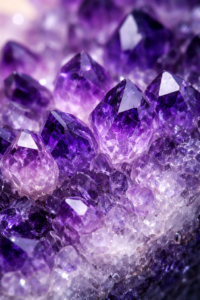
“The serene beauty of Amethyst: Its captivating purple hues formed by iron impurities and natural radiation within quartz crystals over millennia.”
Physical Characteristics
Amethyst is easily identifiable by its purple color, which can range from a delicate pale lilac to a deep, rich violet, sometimes with reddish or bluish undertones. It often exhibits color zoning, where different shades of purple, or even clear/milky quartz, are visible within a single crystal. Amethyst has a vitreous (glassy) luster when polished. With a Mohs hardness of 7, it is a durable gemstone suitable for most types of jewelry, though care should be taken to avoid harsh impacts. It forms as prismatic hexagonal crystals, often in druzy formations or large geodes. Its transparency ranges from clear and gem-quality to translucent or opaque in larger masses.
Origins & Geography
Amethyst is found in numerous locations worldwide, with some regions being famous for particularly high-quality or abundant material.
Major sources of Amethyst include:
- Brazil: The largest producer of Amethyst, famous for enormous geodes (Amethyst Cathedrals) from Rio Grande do Sul, often yielding medium to deep purple crystals.
- Uruguay: Known for producing some of the highest quality, deepest purple, and most vibrant Amethyst, often forming smaller, more intense clusters within basalt geodes.
- Zambia: A significant source, producing beautiful deep purple crystals with good clarity.
- Canada (Thunder Bay, Ontario): Known for unique red-capped Amethyst, where hematite inclusions give the crystal tips a reddish hue.
- Siberia (Russia): Historically known for the finest quality “Siberian Amethyst,” characterized by a rich purple color with flashes of red and blue, though commercial mining here has largely ceased.
- USA (Arizona, North Carolina, Georgia): Various deposits, including the Four Peaks Mine in Arizona, which produces good quality material.
- Madagascar: Known for producing a variety of Amethyst, including pinkish or “Rose de France” shades.
- South Korea, Bolivia, and Mexico: Other notable sources.

“Amethyst’s Global Tapestry: From the colossal geodes of Brazil to the intense hues of Uruguay and the unique finds in Canada, a beloved crystal sourced worldwide.”
Cultural History & Legends
Amethyst has been highly prized and revered by civilizations throughout history, imbuing it with rich cultural significance and numerous legends.
- Ancient Greece & Rome: Believed to prevent intoxication. Cups were carved from Amethyst, and it was worn as an amulet to protect against drunkenness and overindulgence. Associated with Bacchus, the god of wine.
- Medieval Europe: Believed to heal the sick and bring protection in battle. Worn by royalty, nobility, and clergy (often called “the Bishop’s Stone” due to its use in ecclesiastical rings), symbolizing piety, humility, and spiritual wisdom.
- Christianity: Symbolized purity, Christ’s suffering, and humility. Its color echoed the robes of bishops and cardinals.
- Ancient Egypt: Used for carving amulets, intaglios, and incorporated into jewelry.
- Feng Shui: Utilized for its ability to calm and purify, often placed in wealth corners or spiritual areas of the home.
- Legends: One Greek myth tells of Bacchus, angered, vowing to unleash tigers on the first person he saw. A beautiful maiden, Amethyst, on her way to worship Diana, was the unfortunate first. Diana turned Amethyst into a clear quartz statue to save her. Bacchus, filled with remorse, poured wine over the statue, staining it purple.
Spiritual, Emotional, Mental & Physical Healing
Amethyst is celebrated as a powerful and multifaceted healing stone, offering benefits across all levels of being.
- Spiritual: Amethyst is supremely beneficial for spiritual growth and awareness. It opens and activates the Crown and Third Eye Chakras, enhancing intuition, psychic abilities, and spiritual insight. It facilitates connection to higher realms, divine wisdom, and expands consciousness. It is a highly protective stone, guarding against psychic attack, negative energies, and promotes a clear spiritual path. It also aids in understanding dreams and promoting lucid dreaming.
- Emotional: A profoundly calming and soothing stone, Amethyst helps to alleviate stress, anxiety, and depression. It brings emotional balance, dispelling anger, fear, and grief. It promotes inner peace, a sense of serenity, and helps in coping with loss and sadness. Amethyst encourages self-control and can aid in overcoming addictions and compulsive behaviors.
- Mental: Enhances mental clarity, focus, and decision-making. It helps to quiet an overactive mind, improving concentration and reducing mental fog. Amethyst stimulates new ideas, promotes sound judgment, and aids in remembering and understanding dreams. It supports problem-solving and helps one to assimilate new concepts.
- Physical: Amethyst has numerous purported physical healing properties. It is often used to relieve headaches, reduce pain (especially tension-related), and release stress and tension in the body. It supports the immune system, cleanses organs, and promotes healthy blood circulation. Amethyst is believed to aid in cases of insomnia, promoting restful sleep. It can also help with skin conditions, digestive issues, and strengthen the endocrine system.
Uses: Meditation, Ritual, Relationships, Therapy
Amethyst’s versatile and gentle yet powerful energy makes it one of the most widely used crystals.
- Meditation: Amethyst is an exceptional stone for meditation. Holding a piece or placing it in your meditation space can quickly induce a state of calm, deepen concentration, and facilitate access to higher states of consciousness and intuition.
- Ritual: Used extensively in purification rituals, protective grids, dream work, and spiritual ceremonies. It’s often placed on altars to amplify spiritual energy, promote peace, and connect with divine guidance.
- Relationships: Amethyst brings calm and balance to relationships, helping to diffuse tension and promote peaceful resolution of conflicts. It encourages open communication from a place of higher wisdom and fosters empathy.
- Therapy: In crystal healing, Amethyst is frequently placed on the Third Eye or Crown Chakra for spiritual alignment and intuition, or on the body to relieve pain, stress, and promote relaxation. Its ability to absorb negative energy makes it a good tool for energetic cleansing during therapy sessions.
Chakras Activated
Amethyst primarily activates and purifies the higher chakras, fostering spiritual connection and intuitive wisdom.
- Crown Chakra (Sahasrara): Located at the top of the head, this chakra connects to divine wisdom, universal consciousness, and spiritual enlightenment. Amethyst opens, purifies, and activates the Crown Chakra, facilitating profound spiritual understanding and cosmic connection.
- Third Eye Chakra (Ajna): Situated between the eyebrows, governing intuition, insight, and inner vision. Amethyst powerfully stimulates the Third Eye, enhancing intuitive abilities, psychic awareness, and guiding one towards spiritual clarity and discernment.
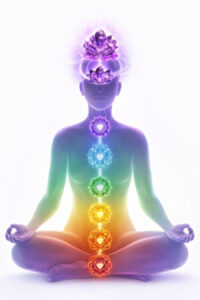
“Amethyst’s Spiritual Alignment: Opening the Crown Chakra for divine connection and the Third Eye Chakra for profound intuition and insight.”
Wearing, Home, and Workplace Uses
Amethyst is incredibly popular for both jewelry and home/office decor due to its beauty and wide range of benefits.
- Wearing: Wearing Amethyst jewelry (rings, pendants, earrings, bracelets) keeps its calming, protective, and intuitive energies close. A pendant near the heart or throat helps with emotional balance and communication, while a ring or bracelet can offer constant stress relief. It’s a traditional February birthstone.
- Home:
- Bedrooms: A small Amethyst cluster or geode on a nightstand or under the bed promotes peaceful sleep, reduces insomnia, and wards off nightmares.
- Living Areas: Large geodes or clusters infuse a space with calming, protective energy, promoting harmony and spiritual awareness.
- Meditation Space: Essential for creating a serene and high-vibrational environment.
- Entryways: For protection and welcoming calm energy.
- Workplace:
- Desk: Placing Amethyst on your desk can help reduce stress, improve focus, and create a calm atmosphere amidst demanding tasks. It can also guard against negativity from colleagues or electronic devices.
- Meeting Rooms: Can be placed to encourage calm discussion and spiritual understanding.
Crystal Combinations
Amethyst combines harmoniously with a wide array of crystals, enhancing various properties.
- With Clear Quartz: Amplifies Amethyst’s spiritual, calming, and protective energies, making its effects more potent and widespread throughout a space or aura.
- With Rose Quartz: Creates a powerful duo for emotional healing, self-love, and compassion, blending Amethyst’s soothing energy with Rose Quartz’s nurturing vibrations.
- With Black Tourmaline or Obsidian: For enhanced psychic protection and grounding, creating a formidable shield against negativity while promoting spiritual growth.
- With Selenite: Accelerates spiritual cleansing, energy clearing, and connection to higher realms, creating a synergistic effect for spiritual advancement.
- With Labradorite: Enhances intuition, psychic development, and spiritual awareness, making it easier to navigate spiritual journeys and access mystical insights.
Shapes & Forms
Amethyst is one of the most versatile crystals and is found in almost every possible form.
- Geodes/Clusters: Natural cavities lined with Amethyst crystals, highly prized for radiating energy throughout a room, cleansing other crystals, and as stunning decorative pieces.
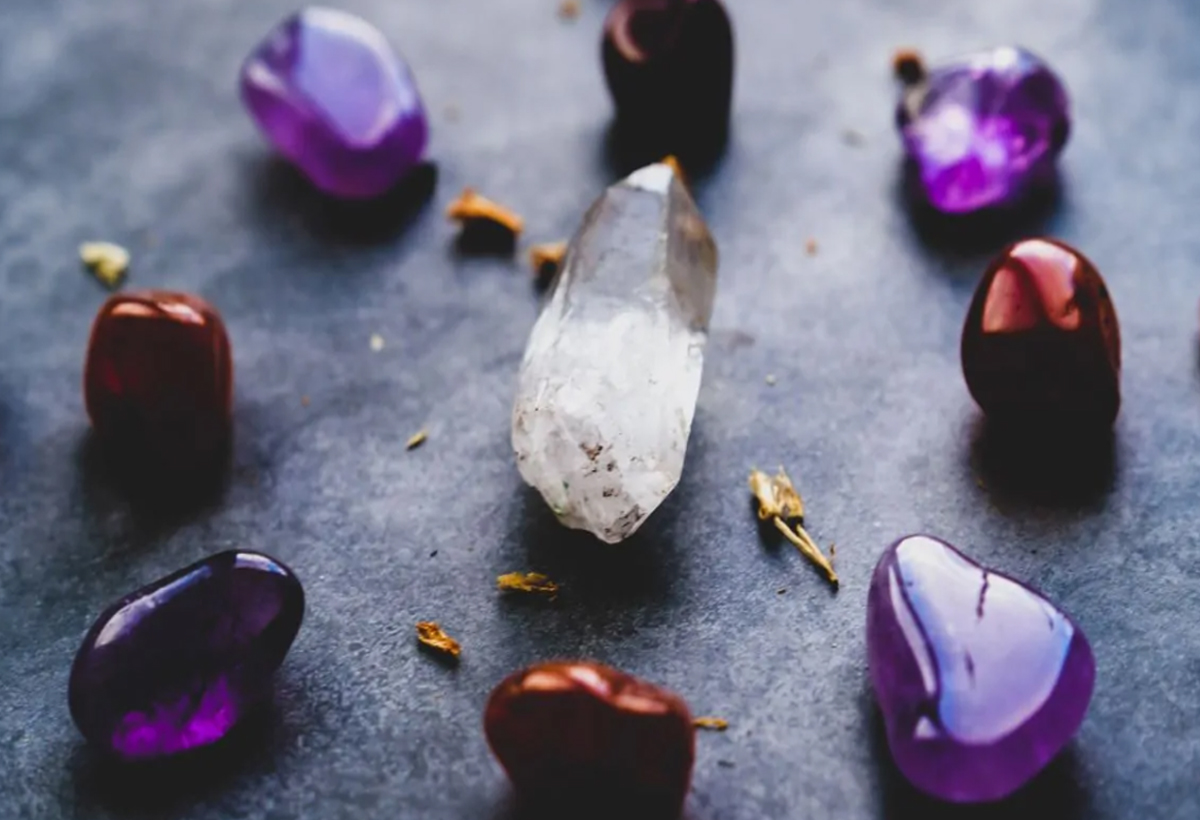
- Tumbled Stones: Very popular, smooth, polished pieces perfect for carrying, chakra placement, or decoration.
- Points/Towers/Obelisks: Used for directing energy, healing, and as focal points in grids.
- Spheres/Orbs: Used for meditation, scrying, and radiating energy evenly.
- Rough/Natural Crystals: Raw chunks or individual crystals, popular for collectors and raw energy work.
- Jewelry: Extremely popular in all forms of jewelry, including beads, cabochons, facets, rings, pendants, earrings, and bracelets.
- Carvings: Sculpted into various objects like animals, angels, hearts, or decorative items.
Energy Color & Zodiac Significance
- Energy Color: Amethyst’s defining purple color is deeply symbolic. Violet hues are traditionally associated with royalty, spirituality, wisdom, and higher consciousness. It represents transformation, psychic abilities, peace, and purification. The varying shades reflect the spectrum of spiritual growth from gentle awakening to profound enlightenment.
- Zodiac Significance: Amethyst is the traditional birthstone for February and is highly compatible with several zodiac signs.
- Aquarius (January 20 – February 18): Enhances their innovative thinking, spiritual insight, and helps them to ground their often-ethereal ideas.
- Pisces (February 19 – March 20): Deepens their intuition, spiritual connection, and empathy, while providing protection from energetic overwhelm.
- Aries (March 21 – April 19): Calms their fiery nature, promoting patience, clear thinking, and spiritual alignment.
- Sagittarius (November 22 – December 21): Supports their quest for truth and adventure, enhancing wisdom and spiritual understanding.
- Capricorn (December 22 – January 19): Helps Capricorns to relax, reduce stress, and connect with their spiritual side amidst their hardworking nature.
- “Amethyst’s Spiritual Resonance: A calming and intuitive ally for Aquarius, Pisces, Aries, Sagittarius, and Capricorn.”
Cleansing, Charging & Care Instructions
Amethyst is a durable crystal, but its color can be sensitive to prolonged exposure to intense light.
- Cleansing:
- Running Water: Hold under cool, running water for a few minutes.
- Smudging: Pass through sage or palo santo smoke.
- Sound: Use a singing bowl or tuning fork.
- Earth Burial: Bury in the earth overnight (in a cloth bag to keep clean) for deep cleansing.
- Moonlight: Place under the light of a full moon overnight. This is the most recommended method for Amethyst, as it is gentle and effective.
- Charging:
- Moonlight: Place under the light of a full moon overnight. This is the safest and most effective charging method for Amethyst.
- Clear Quartz or Selenite: Place on a Clear Quartz cluster or Selenite charging plate.
- Avoid Direct Sunlight: Do NOT charge Amethyst in direct, intense sunlight for prolonged periods, as its color can fade significantly over time.
- Care:
- Durability: With a Mohs hardness of 7, Amethyst is quite durable for daily wear.
- Avoid Harsh Chemicals: Keep away from strong acids, abrasive cleaners, and harsh detergents.
- Heat: Protect from extreme heat and sudden temperature changes, which can also cause color fading or damage.
- Ultrasonic & Steam Cleaners: Generally considered safe for Amethyst, but if the stone has internal fractures or inclusions, it’s safer to use warm soapy water and a soft brush.
- Storage: Store Amethyst jewelry and specimens separately in a soft cloth pouch or a lined box to prevent scratching from harder objects. Keep it out of prolonged direct sunlight.
Authenticity Tips
Amethyst is abundant, but synthetic versions and heat-treated varieties exist.
- Color & Clarity: Natural Amethyst often has some slight inclusions, color zoning, or variations in saturation. Perfectly clear, uniformly deep purple stones might be synthetic, although high-grade natural Amethyst can be very clean.
- Temperature: Genuine stone will feel cool to the touch and take longer to warm up in your hand compared to glass or plastic.
- Hardness: A genuine Amethyst (Mohs 7) should easily scratch glass (Mohs ~5.5).
- Bubbles/Striations: Look for natural striations (growth lines) on crystal faces. Imitations (glass) often contain tiny, perfectly round air bubbles.
- “Prasiolite”: This is green quartz, often created by heat-treating Amethyst (usually from Brazil or Arizona). It’s a natural quartz, but its color is altered. Should be disclosed.
- Price: Amethyst is generally affordable. Extremely cheap prices for very large, flawless, vibrant pieces might be suspicious.
- Purchase Recommendation: http://www.prohealingcrystals.com
FAQ Section
- Q: What is Amethyst commonly used for?
- A: Amethyst is widely used for stress relief, promoting peaceful sleep, enhancing intuition, spiritual protection, and aiding in overcoming addictions and negative patterns.
- Q: Can Amethyst fade in sunlight?
- A: Yes, Amethyst’s purple color can fade with prolonged exposure to direct, intense sunlight due to its iron content and crystal structure. Always store it away from direct sun.
- Q: Is Amethyst a good stone for sleep?
- A: Absolutely. It is highly recommended for promoting restful sleep, reducing insomnia, and warding off nightmares due to its calming and soothing energy.
- Q: How do I know if my Amethyst is real?
- A: Genuine Amethyst feels cool to the touch, can scratch glass, and often shows natural imperfections or color zoning. Be wary of uniform, unnaturally vibrant colors or perfectly round bubbles (common in glass fakes). Professional testing is definitive.
- Q: What is the meaning of the word “Amethyst”?
- A: It comes from the Greek word amethystos, meaning “not intoxicated,” reflecting the ancient belief that it protected against drunkenness and overindulgence.
Final Summary / Closing Thoughts
Amethyst, with its regal purple hues, stands as a timeless beacon of spiritual tranquility and inner wisdom. Revered through ages for its calming embrace and protective aura, it gently guides us toward higher consciousness, intuitive clarity, and profound emotional balance. Whether sought for its ability to soothe anxieties, foster spiritual awakening, or simply grace a space with its serene beauty, Amethyst remains an enduring testament to nature’s capacity to inspire peace and promote holistic well-being.